Ancient Egypt · c. 1000 BC
Seventy Days West
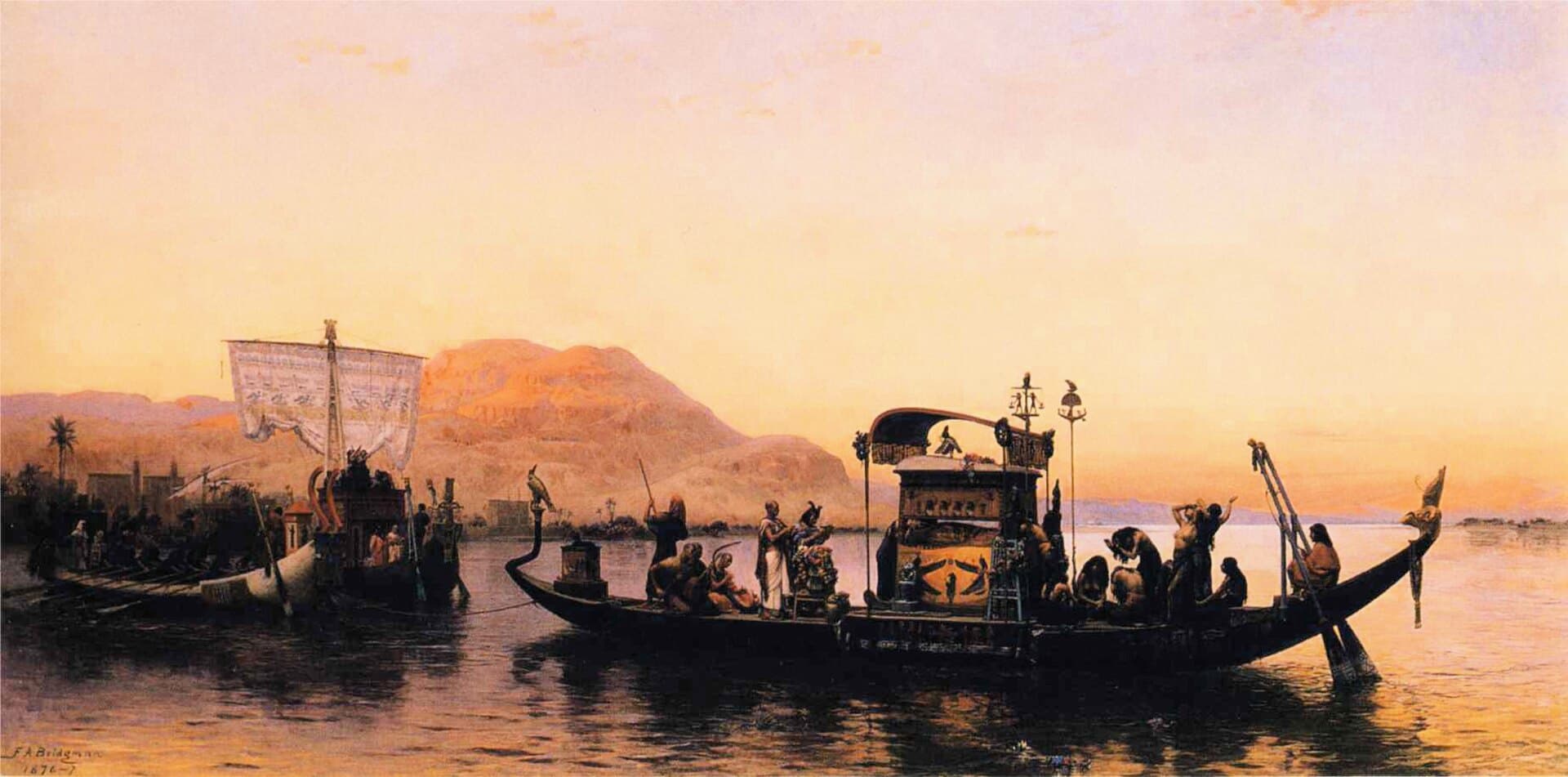
A gilded barge ferries the dead across the Nile, 70 days after the last breath
look closer
A gilded shrine sits under the great curved canopy, and flowers are heaped on its roof. The coffin is hidden inside. The body in it spent about 40 days packed in natron salt before the linen went on.
The boat is being rowed across the river, not down it. Death in Egypt is a ferry ride. The living keep to the east bank of the Nile, where the sun comes up, and the dead move to the west, where it goes down. The whole slow business on the water, the towed barge, the gilded shrine standing on it, the women wailing at the stern, exists to carry one dried body about a mile. Seventy days have passed since this man died. That was the lawful limit between last breath and burial, and Herodotus, who toured the embalmers’ quarter and reported their three price tiers like a wary customer, says the count was kept strictly. The 70 days were earned. In the purification tent the embalmers drew the brain out through the nostrils with a hook and threw it away. Egypt never worked out what the brain was for, since thinking so plainly happened in the heart. The heart stayed in the chest, because its owner would need it weighed against a feather in the hall of judgment. Liver, lungs, stomach and guts went into four jars under the guard of the four sons of Horus. Then the body was packed, inside and out, in natron, a salt the desert makes by itself in a dried lake bed west of the Delta. It lay there about 40 days, until what remained was leather and bone and could be wound in linen by the mile. The embalmers of Ramses IV, improvising at the end, gave him two small onions for eyes. On the far bank the coffin will be stood upright at the tomb door, and a priest in a leopard skin will touch its mouth with a ritual adze. That rite is the Opening of the Mouth, and after it the dead man can eat, speak and see again. The wailing women aboard are professionals, paid like any other trade in bread and beer, hair loosed, arms thrown up in the exact gesture painted on tomb walls a thousand years before them. A funeral this rich is also an advertisement, and by this man’s century the wrong readers had won. The great tombs of the west bank stood stripped, some by the same crews that had cut them. So the priests of Amun ran the robbery in reverse. They opened the royal tombs themselves, rewrapped the kings, and noted each move in ink on the coffins. Then they lowered Ramses the Great and some 50 kings, queens and priests down a cliff shaft near Deir el-Bahari. The hiding place held for 28 centuries, until 1881. Frederick Arthur Bridgman was an Alabama-born engraver of bank notes who got himself to Paris and into Gérôme’s studio. He spent the winter of 1873 to 1874 sailing up the Nile and came home with crates of sketches. He painted the crossing over two years and signed it with both, 1876-7. At the Salon of 1877 it made his name, and James Gordon Bennett of the New York Herald, the man who had sent Stanley after Livingstone, bought it. On the prow post Bridgman set a falcon, the shape Horus takes, riding just ahead of the coffin all the way over.