Ancient Rome · August, AD 70
The Ninth of Av
The Temple burns on the day its own calendar mourns
look closer
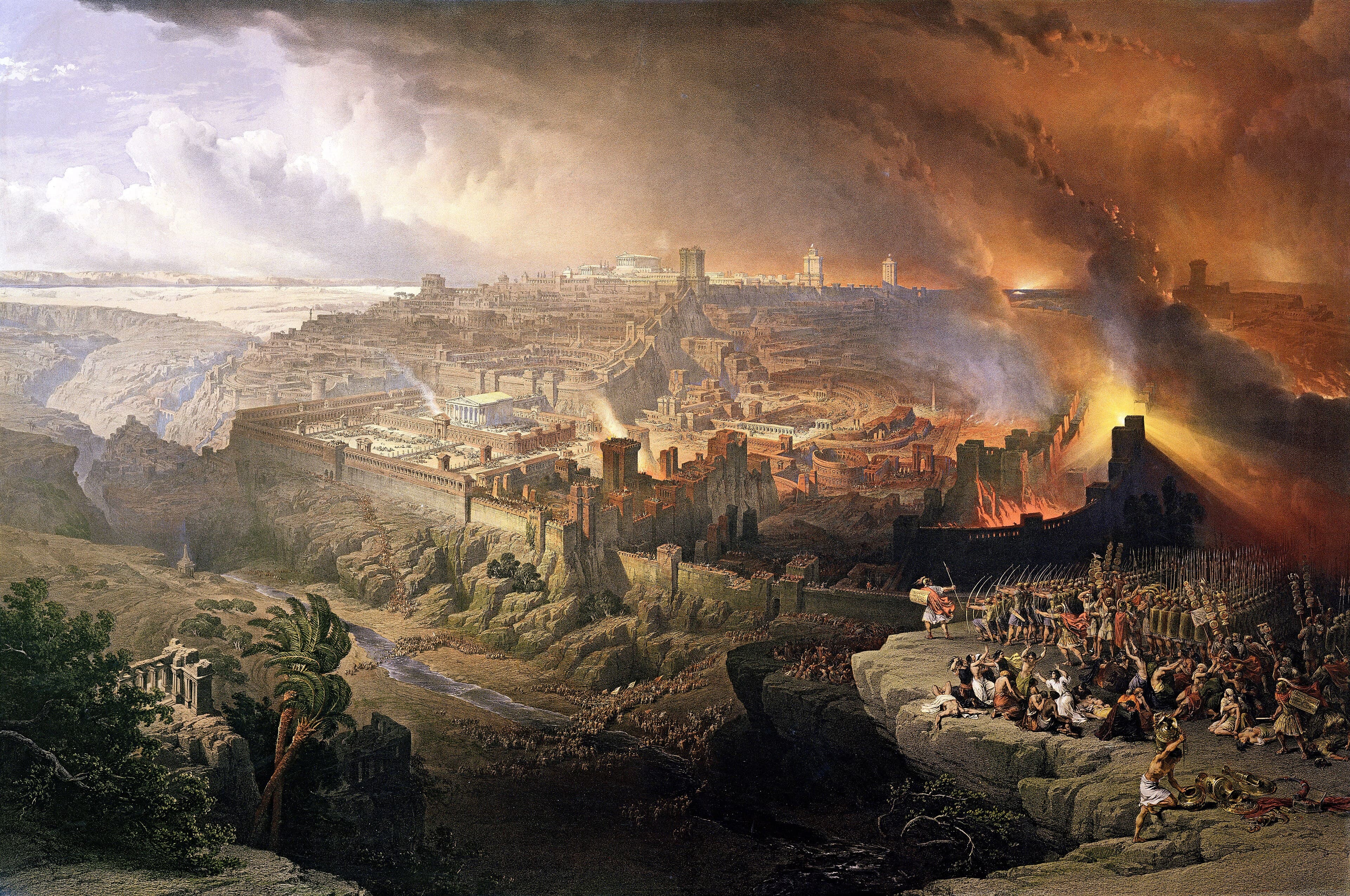
Herod's Temple inside its double colonnade, 80 years in the building and standing finished for 6. Smoke is already lifting off the courts and the tower at the corner of the platform is alight.
Titus brought four legions up to Jerusalem in the spring of 70, a few days before Passover, when the city was swollen with pilgrims who would never leave. Inside the walls the revolt had already been eating itself for two years. The factions of John of Gischala and Simon bar Giora held different quarters and fought in the streets. During the winter each side burned the grain reserves of the other, to keep a rival from having them. The stores that might have outlasted any siege were ash before the first Roman ramp went up. The siege ran through the summer, wall by wall. When deserters kept slipping out, Titus ringed the city with a wall of his own, five miles of it in three days, and let the famine work. Josephus, the captured rebel general turned Roman interpreter, walked the perimeter shouting offers of mercy and recorded what the hunger did inside; some of what he recorded is not repeatable. By August the fighting had narrowed to the Temple platform. Josephus, writing later under the patronage of Titus' family, insists Titus wanted the sanctuary spared; a rival tradition says he ordered it burned. On the ninth day of the month of Av, or the tenth, a soldier threw a burning brand through a gilded window. Whether anyone ordered him to is not known. Herod had spent 80 years rebuilding the Temple, and it had been finished only six years earlier. It went up in an afternoon and a night. Josephus himself points at the calendar: it was the same day of the same month, he writes, on which the Babylonians had burned the First Temple on that spot more than six centuries before. The day was already the calendar's wound, and now it was the wound twice. The lampstand and the golden table were carried to Rome and paraded in the triumph, where the Arch of Titus still shows them on the shoulders of soldiers; Josephus counts 97,000 enslaved. Part of the loot financed the new amphitheater in the city center, the one now called the Colosseum. The Temple was never rebuilt. A stretch of its western retaining wall stands, and is prayed at. David Roberts travelled Egypt and the Holy Land through 1838 and 1839, making the studies that became his Holy Land lithographs. In 1850 he painted the city whole and dying at once: Herod's courts white and gold in the center, the outer districts already in flame, the legion standards coming up the near ridge. He painted the building nobody had seen in 18 centuries more carefully than he painted the fires taking it.