Ancient Rome · 24 January, AD 41
The Man Behind the Curtain
Two feet under a curtain decide who rules the world
look closer
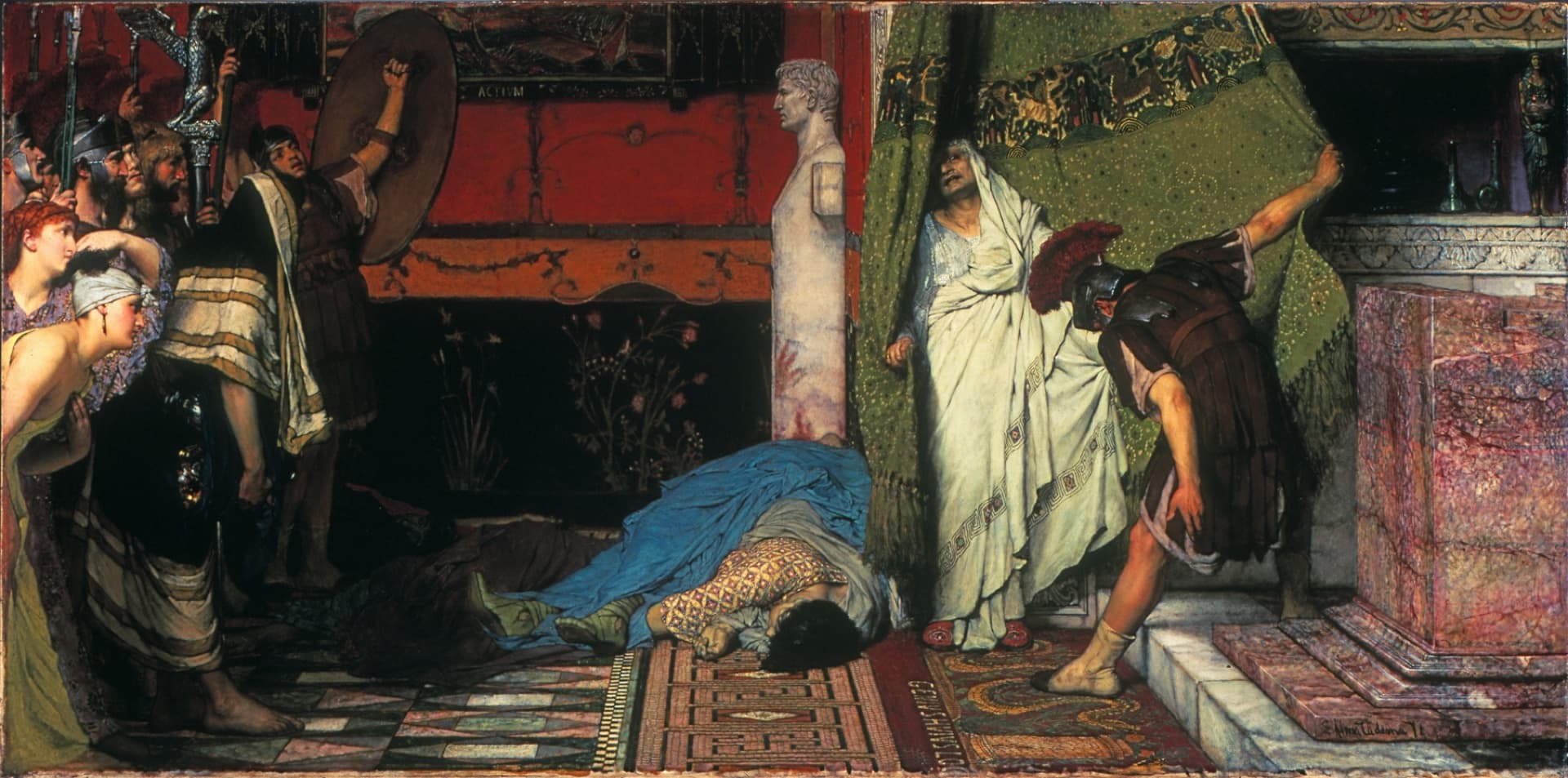
A pair of red shoes shows under the hem of a toga at the edge of the carpet. They belong to Claudius, and the guard's own foot is planted beside them. Alma-Tadema makes the colour the giveaway, and a soldier looking for loot looks down and finds an emperor.
At midday on 24 January in the year 41, the emperor Gaius left the Palatine games through a covered passage to look over a choir of young performers. The army had nicknamed him Caligula when he was a small boy in his father's camps. The tribune Cassius Chaerea reached him first. Caligula had spent years amusing himself with Chaerea, handing him obscene watchwords to carry to the guard and mocking his voice; Chaerea had asked for this assignment. The first blow went into the neck, and the count of wounds afterward was 30. The German bodyguard arrived moments too late and began killing whoever stood nearest, guilty or not. Before the afternoon was out, Caligula's wife had been stabbed and his small daughter killed against a wall. Rome had a new crime on its books: for the first time, an emperor was dead by assassination. What happened next was found behind a curtain. Claudius, the dead man's uncle, heard the shouting, slipped onto a balcony, and hid in the hangings of the door. A soldier ransacking the palace noticed two feet showing beneath the cloth. Josephus preserves the soldier's name, Gratus. He pulled the curtain back expecting loot and found the last adult male of the imperial house shaking on the floor. Claudius was 50. He limped and he stammered. His own mother called him a man nature had begun and not bothered to finish. The family had kept him out of public view for decades, which is exactly why every purge had passed over him. Gratus hailed the huddled man as emperor. The Praetorians carried him to their camp in a litter while the Senate, meeting on the Capitol, spent the night discussing the restoration of the Republic. The debate ended when it became clear where the soldiers stood, and what Claudius had offered them: 15,000 sesterces a man. It was the first time the throne of Rome was bought in the open, and the guard remembered the going rate for the next two centuries. The family joke then ran the empire for 13 years, and ran it well. Britain was invaded, the harbor at Ostia dug, two aqueducts finished. All of it came from the man who had filled his forced idleness writing 20 books of Etruscan history in Greek, every one of them since lost. Alma-Tadema painted the discovery in 1871 and hid the whole argument in the set dressing. Claudius is given red shoes, which is how a soldier ransacking a corridor knows what he has cornered, and the corpse on the carpet is given green ones, which is where the nickname came from. The soldier's bow is bent so deep it could pass for another round of mockery, which is roughly how the Senate took it too. A marble herm of Augustus stands over the corridor, a pillar topped with his head, two bloody handprints on its shaft. The word ACTIVM is lettered on the wall behind it: the grandfather's victory, watching what the household had come to.