Ancient Rome · 24 August, AD 79
The Last Day of Pompeii
Vesuvius turns noon to midnight over the Bay of Naples
look closer
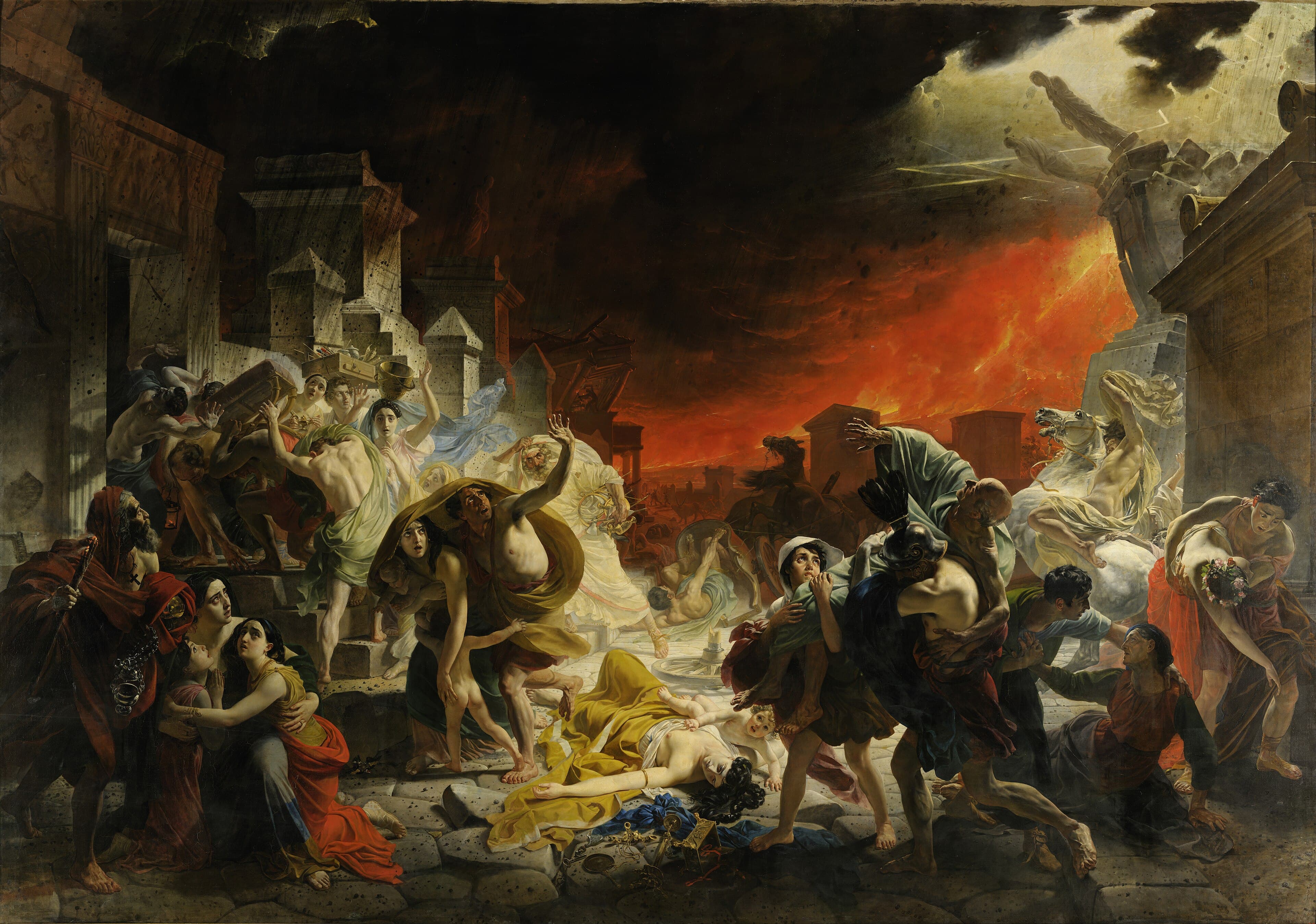
Two statues pitch head first off a roof into the red. Bryullov lets no daylight into the picture. The red glow is the mountain, and the white streaks are lightning.
The mountain has smoked before. No one alive remembers it doing anything worse, so the bakers of Pompeii slide 81 loaves into the ovens and the forum fills as it always does. It is election season: fresh paint on the walls asks votes for Helvius Sabinus for aedile, and the fullers and the fish-sauce men endorse their candidates like everyone else. Half the town is still scaffolding from the earthquake 17 years back; masons are everywhere, and repair is ordinary life here. For four days small tremors have been knocking cups from shelves. Campania shakes often. Vesuvius is simply the green mountain where the vineyards grow, quiet for so many centuries that nobody thinks of it as anything but scenery. Just after midday, Vesuvius opens. A column of ash and pumice climbs 20 miles into the sky, spreads like a pine tree, and blots out the sun. Across the bay at Misenum, a 17-year-old watches the cloud and will later fix its shape in two letters so exact that volcanologists still call this kind of eruption Plinian, after his family. His uncle Pliny, admiral of the fleet and author of a 37-book natural history, orders a fast ship readied so he can look closer. Then a note arrives from a friend named Rectina, trapped at the foot of the mountain, and curiosity becomes a rescue: the warships go out. Pumice rattles on the decks as they run in under the cloud. Fortune favors the brave, the admiral tells his helmsman, and steers for Stabiae. In Pompeii, stones begin to fall, softly at first, a grey hail that people shake from their hair. By evening the roofs are giving way under the weight. Some flee toward the sea and find it pulled back, boats stranded in wet sand. Others shelter in cellars with lamps and coins and their children, waiting for morning. At Stabiae the old admiral dines with his terrified hosts. He sleeps loudly enough to be heard through the wall, to prove there is nothing to fear. At last he walks out with a pillow tied over his head against the falling stone. Morning does not come. When the surge sweeps down the mountain at dawn, a tide of burning gas and ash, it is faster than anything on legs. It crosses vineyards, walls, theaters, and harbor in minutes. On the beach the admiral stands up between two slaves, and falls. The fleet he launched saved hundreds of strangers. It could not come back for him. The city sleeps under 16 feet of ash; its small neighbor Herculaneum lies deeper, under 60 feet of rock that arrived as burning mud. Farmers plough the ridge and call it La Città, the city, without remembering why. When diggers reach the streets 1,700 years later, the paint is still on the walls, still asking votes for Helvius Sabinus, in an election that was never held. In 1863 Giuseppe Fiorelli notices hollows in the hardened ash and fills them with plaster. The hollows turn out to be the people: a man shielding his face, a dog at the end of its chain. In one bakery the excavators open an oven shut since the last Roman morning. The 81 loaves are still inside, scorched black but whole, each one scored into eight neat wedges for customers who were coming back within the hour.